
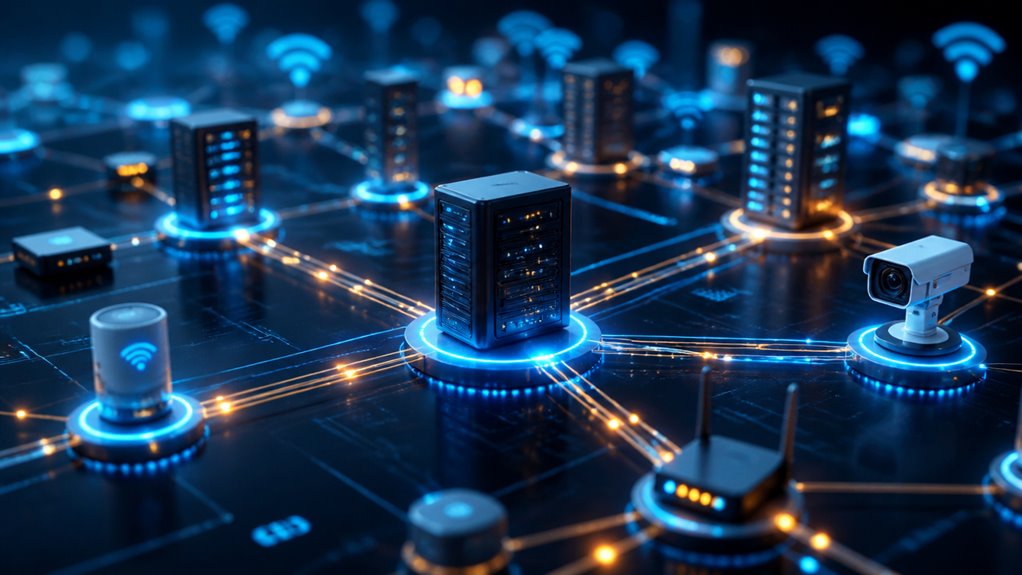
Edge computing brings data processing right where the action happens. Instead of shipping everything off to distant cloud servers, it handles information locally. I’ve noticed this matters most when every millisecond counts—like when an autonomous vehicle needs to brake or a surgeon relies on real-time imaging.
The benefits feel immediate: snappier responses, less bandwidth strain, and fewer points of failure. Hospitals and factories I’ve read about swear by the reliability.
But let’s be honest—getting there isn’t simple. Security gets trickier, old systems don’t always play nice, and finding people who actually understand the tech? That’s its own headache.
So does edge computing fit your organization? That depends entirely on whether you can handle the messy realities while chasing the speed.
How Edge Computing Works: Processing Data Locally
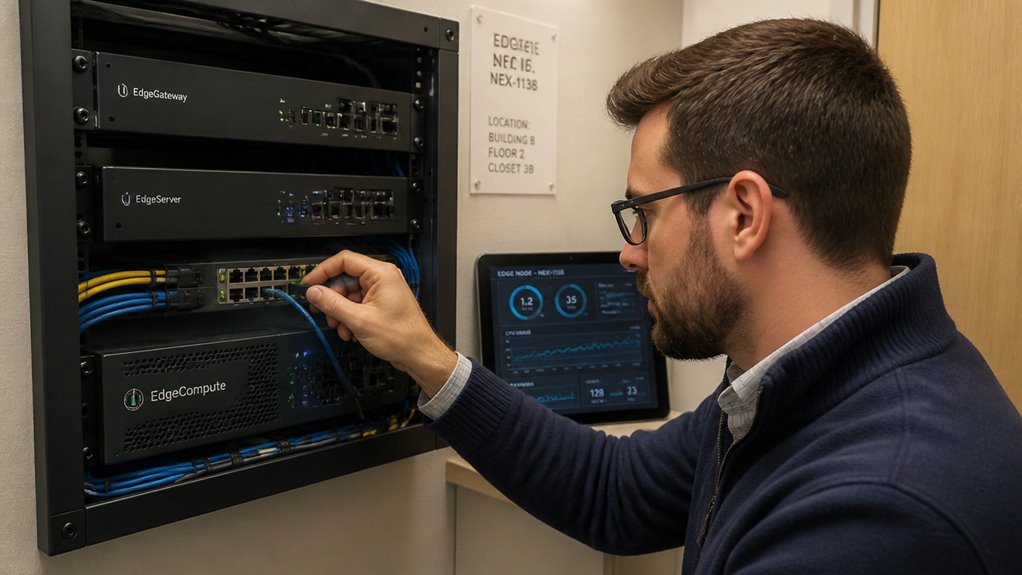
Edge computing processes data at or near its source, rather than sending it to a distant data center. This approach reduces latency, the delay between data collection and response.
When a security camera detects motion, it analyzes the footage locally instead of uploading it to a remote server. Similarly, a smart factory robot processes sensor data on-site to make immediate decisions about production adjustments. IoT devices like smart thermostats perform calculations independently, responding quickly to temperature changes without waiting for cloud responses.
Local processing decreases bandwidth usage and network congestion. It improves reliability since devices continue functioning even when internet connections fail.
Edge servers handle computationally intensive tasks near users, delivering faster performance for applications requiring real-time processing, including autonomous vehicles and industrial automation systems.
Why Latency and Bandwidth Constraints Drive Edge Adoption
The pressure to eliminate delays and conserve network resources has become central to modern computing decisions. Traditional cloud computing sends all data to distant servers, creating latency problems that slow operations. Edge computing processes information locally, reducing travel time for data packets and enabling faster responses.
Bandwidth constraints further drive adoption. Sending massive volumes of data to cloud centers consumes network capacity and increases costs. Autonomous vehicles, security cameras, and industrial sensors generate enormous data streams that strain traditional infrastructure.
Edge devices filter and process information on-site, transmitting only essential results. This approach reduces network congestion, lowers bandwidth expenses, and improves system reliability.
Organizations deploying edge solutions in manufacturing, healthcare, and transportation report measurably faster performance and reduced operational costs, making edge computing increasingly essential for data-intensive applications.
Edge Computing vs. Cloud Computing: Key Differences
While cloud computing and edge computing both process data, they differ fundamentally in location, speed, and resource use. Cloud computing centralizes processing in remote data centers, requiring data travel across networks. Edge computing processes data locally on devices or nearby servers, reducing transmission distance and delay.
Speed distinguishes these approaches markedly. Edge computing delivers faster response times, critical for autonomous vehicles and industrial robots requiring immediate decisions. Cloud computing handles larger datasets and complex analyses, but introduces latency as data travels to distant servers.
Resource allocation differs as well. Edge devices use less bandwidth and storage locally, while cloud systems require substantial network infrastructure. Healthcare monitoring, security cameras, and manufacturing equipment increasingly rely on edge solutions for real-time performance.
Edge Computing Applications in Autonomous Vehicles, Healthcare, and Manufacturing
Because real-time decision-making determines safety and efficiency across multiple industries, edge computing has become essential infrastructure for autonomous vehicles, healthcare systems, and manufacturing operations.
In autonomous vehicles, edge devices process sensor data instantly, enabling immediate responses to road hazards without cloud delays. Healthcare facilities deploy edge computing for patient monitoring, allowing continuous crucial sign analysis and rapid alerts when intervention becomes necessary. Manufacturing plants use edge systems to monitor equipment performance, detecting mechanical failures before they cause production shutdowns.
These applications share a common requirement: decisions must occur at the data source, where latency could compromise outcomes. Edge computing delivers this capability by processing information locally, reducing dependency on distant servers and ensuring systems respond within critical timeframes.
Edge Computing Architecture: Servers, Gateways, and Local Processing
Edge computing architecture organizes hardware and software into three interconnected layers, each handling distinct processing responsibilities. The cloud server, located remotely, manages long-term data storage and complex analytics. Edge gateways, positioned between cloud and devices, filter data, aggregate information, and execute preliminary processing tasks. Local processing units, embedded in devices or nearby hardware, handle immediate computations at the data source.
This layered structure reduces latency by processing urgent tasks locally rather than sending all data to distant servers. For example, a smart factory uses local sensors to detect equipment failures instantly, while edge gateways prioritize which alerts reach cloud servers. Healthcare monitors similarly process patient essentials locally, transmitting only critical readings to central systems.
This architecture balances speed, bandwidth efficiency, and computational load across distributed infrastructure.
Edge Computing Security: Data Privacy in Distributed Systems
The layered architecture that enables fast processing across edge devices and gateways introduces security vulnerabilities that centralized systems do not face. Data travels between multiple endpoints, increasing exposure to interception and unauthorized access. Edge nodes often operate with limited processing power, making advanced encryption difficult to implement consistently.
Organizations must encrypt data in transit between devices, gateways, and cloud servers. Authentication protocols verify that only authorized devices communicate with network resources. Regular software updates patch vulnerabilities before attackers exploit them.
Healthcare systems storing patient records at edge locations require strict access controls. Financial institutions processing transactions at distributed nodes need real-time monitoring for suspicious activity. Manufacturing facilities collecting sensor data must isolate edge networks from public internet access, reducing breach risk and protecting proprietary information effectively.
Integration, Cost, and Skills Gaps: Common Implementation Barriers
While security measures protect edge systems from threats, organizations face significant practical obstacles when deploying edge computing infrastructure across their operations. Integration challenges arise when connecting edge devices to existing legacy systems, requiring custom software solutions and technical expertise.
Implementation costs include hardware purchases, network upgrades, and ongoing maintenance expenses that strain IT budgets. Skills gaps present another barrier, as organizations struggle to find employees trained in edge computing technologies and distributed system management. Many companies lack personnel experienced with IoT device configuration, edge analytics platforms, or real-time data processing. Training existing staff requires time and resources.
These interconnected challenges, integration complexity, financial investment, and workforce shortages, collectively slow edge computing adoption across industries.
How AI and 5G Are Transforming Edge Computing
Artificial intelligence and 5G networks are reshaping how edge computing operates, removing barriers that previously slowed adoption across industries. AI algorithms running at the edge enable real-time decision-making without constant cloud reliance, processing data faster and reducing latency.
Manufacturing facilities use AI-powered edge systems to detect equipment failures before they occur, minimizing downtime and maintenance costs. 5G networks provide the high-speed connectivity necessary for edge devices to communicate efficiently.
Autonomous vehicles depend on 5G and edge computing together, processing sensor data instantly for safe navigation. Healthcare providers deploy edge AI for faster patient diagnostics, analyzing medical imaging locally rather than uploading to distant servers.
These technologies combined lower infrastructure expenses, improve response times, and reduce bandwidth demands, making edge computing deployment increasingly practical for businesses across sectors.
Assessing Your Organization’s Edge Computing Readiness
How prepared is an organization to implement edge computing systems? Organizations must evaluate several key factors before deployment.
First, assess current infrastructure, including network capabilities, data centers, and device compatibility with edge technology. Second, examine workforce skills, determining whether staff can manage edge systems or require training. Third, identify specific use cases where edge computing provides clear benefits, such as real-time manufacturing analytics or autonomous vehicle processing.
Fourth, consider budget requirements for hardware, software, and maintenance. Fifth, review security protocols and data governance standards. Sixth, analyze latency demands and bandwidth constraints within operations.
Organizations should conduct pilot projects with limited scope, testing edge solutions on non-critical systems first. This approach reveals technical and operational gaps before full-scale implementation.
Frequently Asked Questions
What Is the Typical ROI Timeline for Implementing Edge Computing Infrastructure?
Organizations typically realize return on investment from edge computing infrastructure within 12-24 months. The timeline varies based on deployment scale, industry sector, and specific use cases, with faster returns occurring in latency-sensitive applications requiring immediate data processing.
Which Industries Are Currently Leading Edge Computing Adoption Rates?
Notably, manufacturing and telecommunications happen to dominate adoption rates, while healthcare and retail follow closely behind. These sectors prioritize reduced latency and real-time data processing, making edge computing essential for operational efficiency and competitive advantage.
How Does Edge Computing Handle Data Consistency Across Distributed Nodes?
Edge computing maintains data consistency across distributed nodes through techniques including distributed databases, eventual consistency models, and synchronization protocols. Nodes periodically communicate to reconcile differences, though some systems prioritize low latency over immediate consistency.
What Are the Main Hardware Requirements for Setting up Edge Servers?
Edge servers demand virtually infinite processing power to operate effectively. Essential components include powerful CPUs, substantial RAM (minimum 8-32GB), local storage for caching, network interfaces for connectivity, and cooling systems to manage heat dissipation in distributed locations.
Can Existing Legacy Systems Be Retrofitted With Edge Computing Capabilities?
Yes, legacy systems can be retrofitted with edge computing capabilities. Organizations typically integrate edge devices through middleware solutions, APIs, and containerized applications. This approach allows existing infrastructure to process data locally while maintaining compatibility with current operations without complete system replacement.
Conclusion
Edge computing represents a fundamental shift in data processing infrastructure. Like a postal worker delivering mail locally rather than sending everything to a central office, edge systems process information at its source, reducing delays. Organizations adopting edge computing report 40-50% latency reductions. Success requires evaluating network readiness, security protocols, and staff capabilities. Companies must assess their specific operational needs, integration challenges, and budget constraints before implementation.